Industrial generators, furnaces, and boilers are the "workhorses" of infrastructure, but their heavy fuel consumption creates a unique cycle of internal contamination that threatens both the environment and your bottom line.
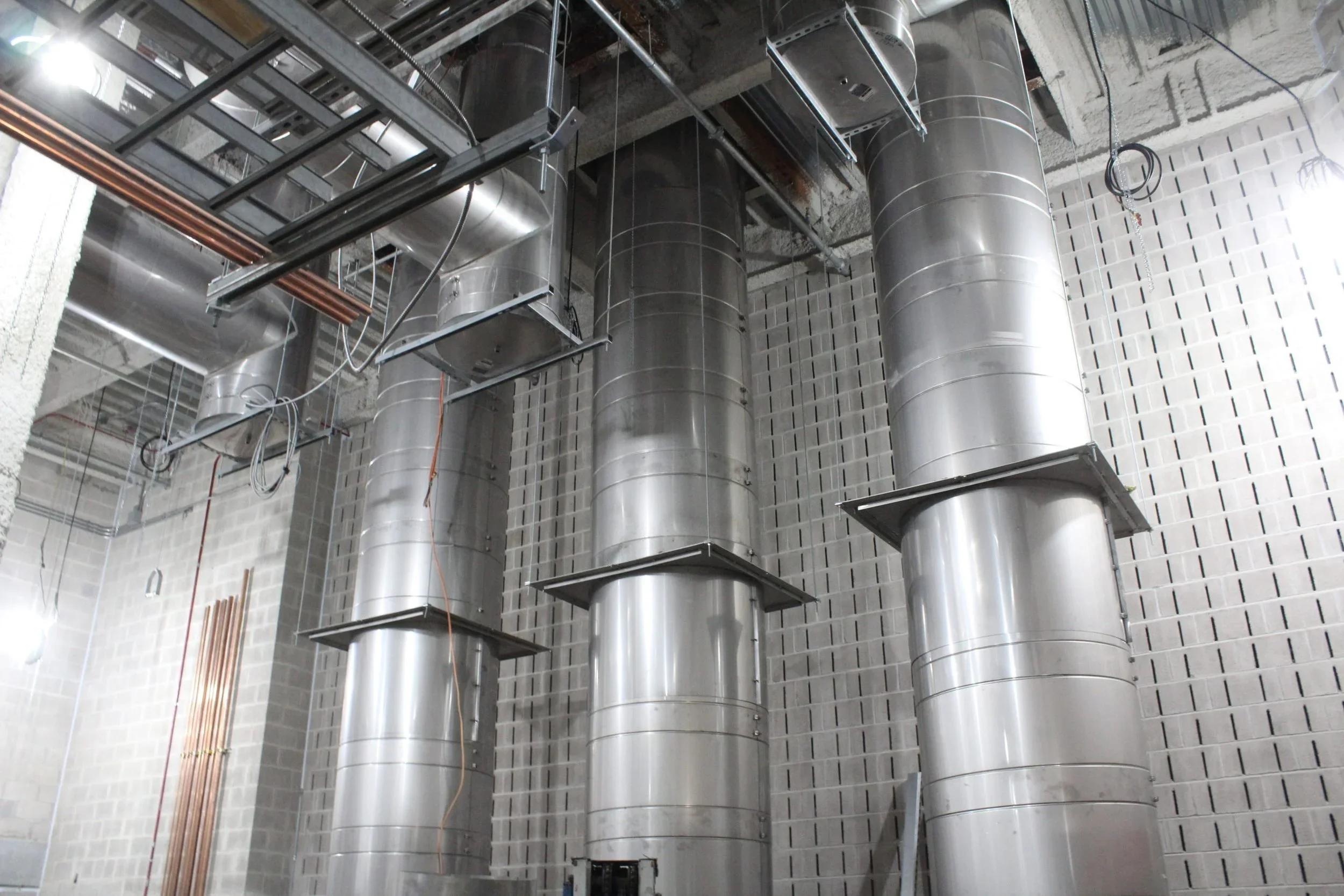
Optimize your industrial power: From fuel tanks to exhaust pipelines, we eliminate carbon buildup and "black fumes" for peak efficiency and total system safety.
The Carbon & Ash Trap
Unlike light residential systems, industrial exhausts deal with heavy oils (diesel, gas oil, fuel oil) that produce high volumes of petroleum ash and carbon particulates.
The Accumulation Cycle: As these particles travel through long, often vertical exhaust pipelines, they bond together, a process accelerated by high humidity. This creates "carbon blocks" that narrow the airway.
The "Startup Blast": Have you noticed immense black fumes during equipment startup? That is the force of the engine breaking loose piles of accumulated soot and micron-sized ash, forcing them out into the atmosphere all at once.
The "Root Cause": Tank & Fuel Hygiene
The efficiency of your exhaust starts in your storage tanks. Diesel and gas oil are mineral-based liquids prone to biological growth.
Petroleum Fungus: Extreme temperature shifts cause bacteria to reproduce rapidly on tank walls, forming a "sludge" or fungus.
The Chain Reaction: When this fungus breaks off, it slips through filters into the combustion chamber. This results in poor fuel atomization, injector malfunctions, and ultimately, a massive increase in soot and Carbon Monoxide (CO) emissions.
Performance → Restores engine "thrust" and prevents backpressure-related stalls.
Cost Savings → Massive reduction in fuel consumption and expensive filter replacements.
Environmental → Eliminates the "Black Fume" effect and lowers toxic emissions.
Safety → Removes combustible carbon blocks that can ignite under extreme exhaust heat.
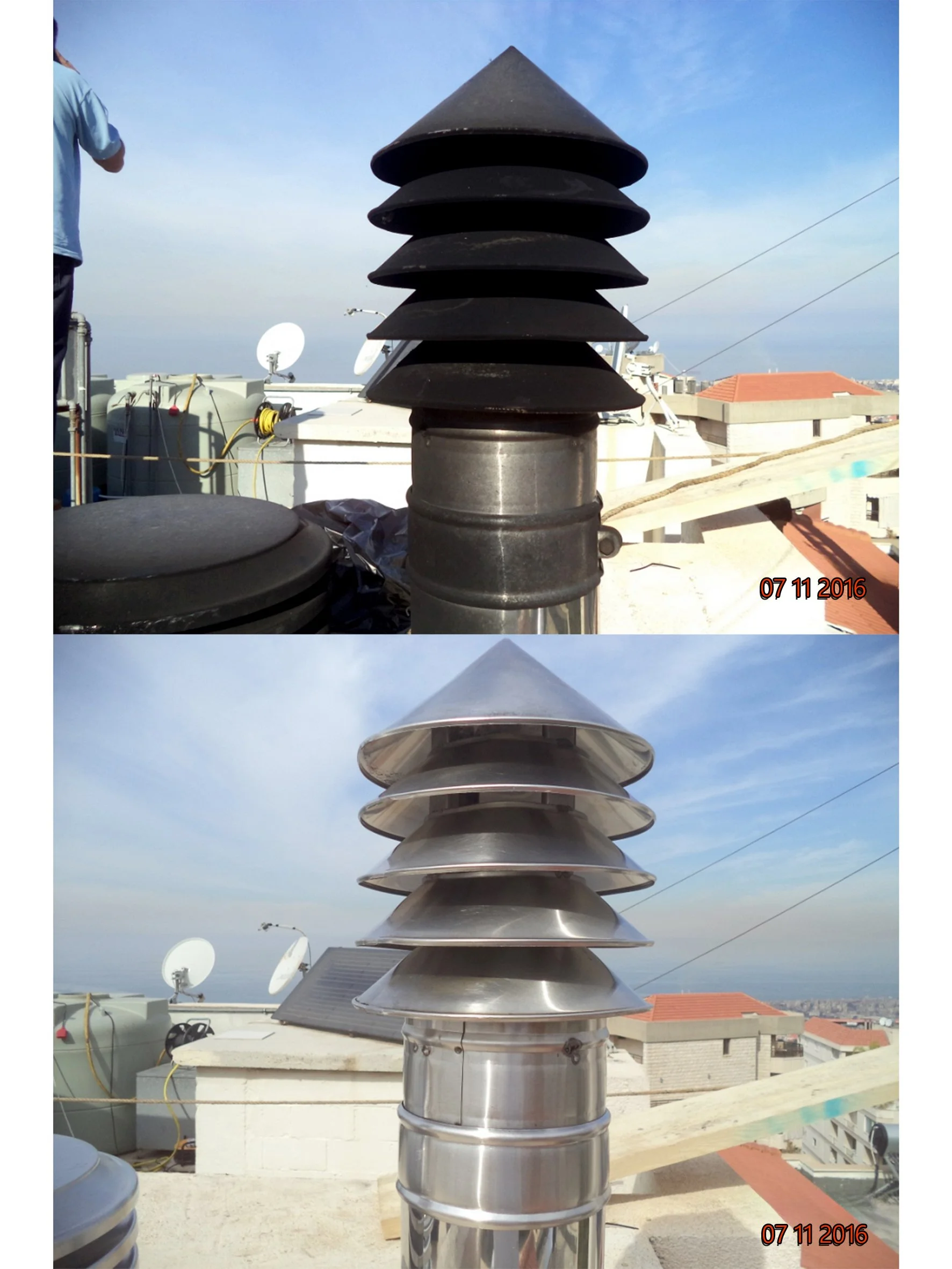
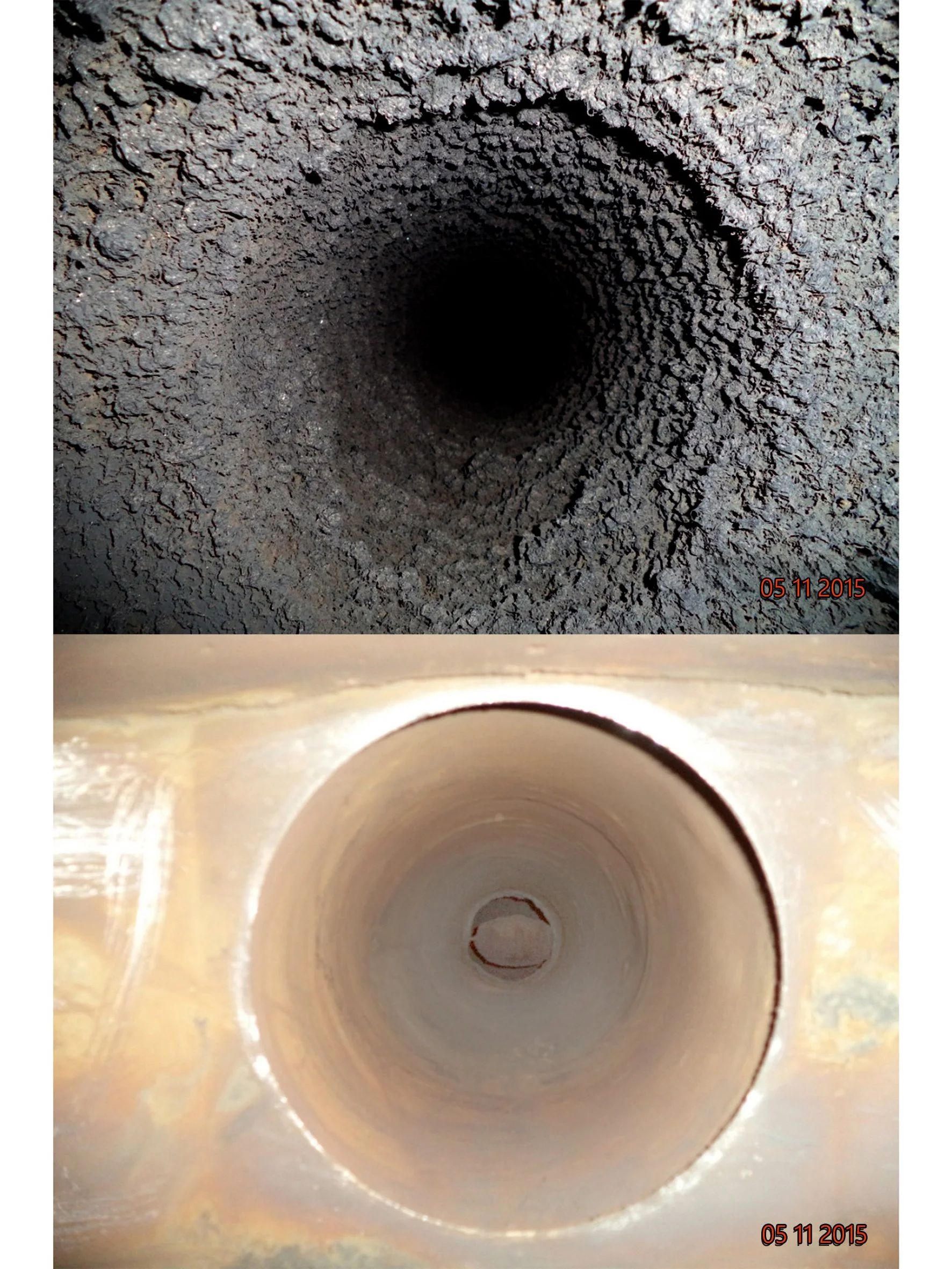
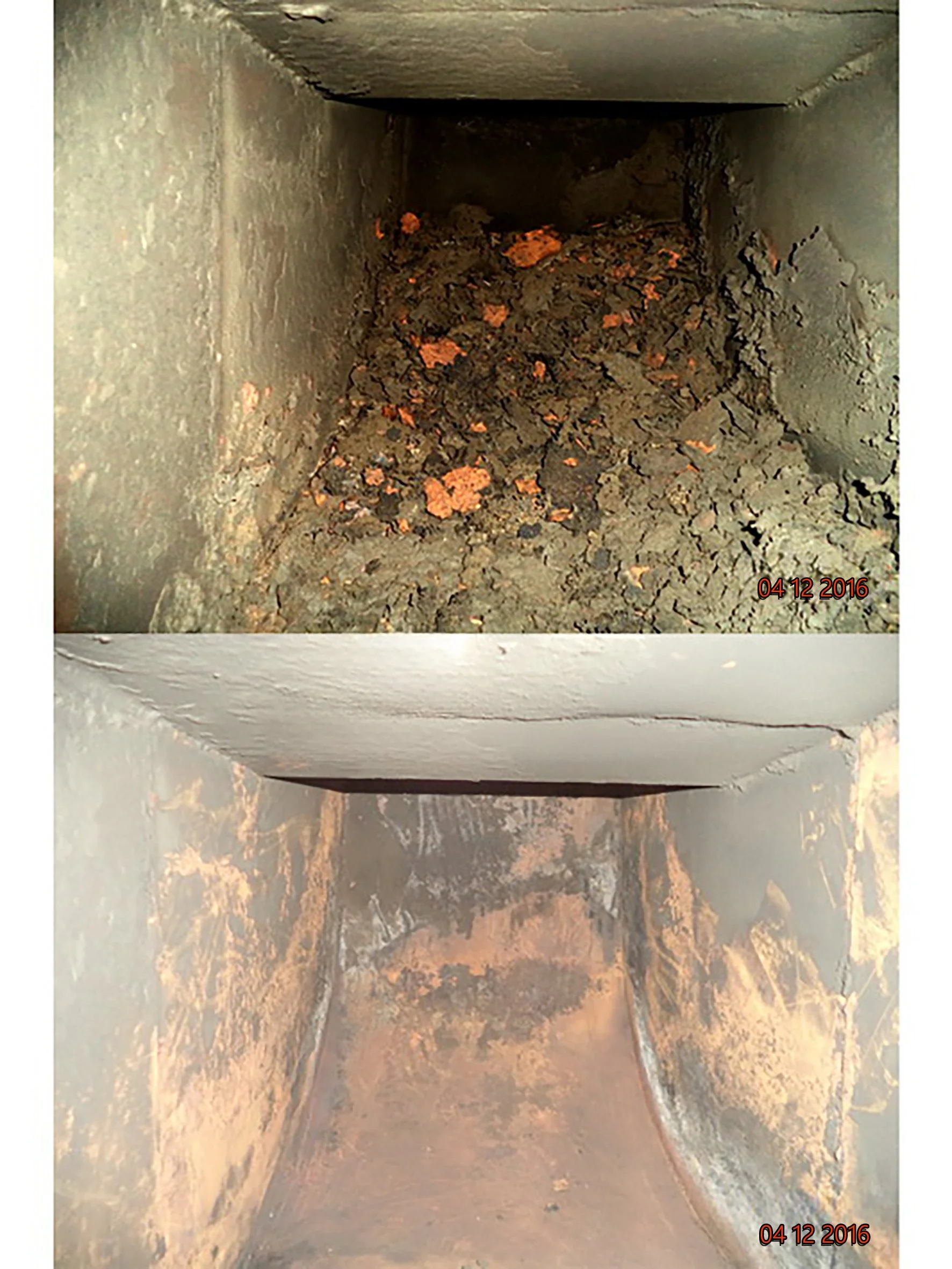
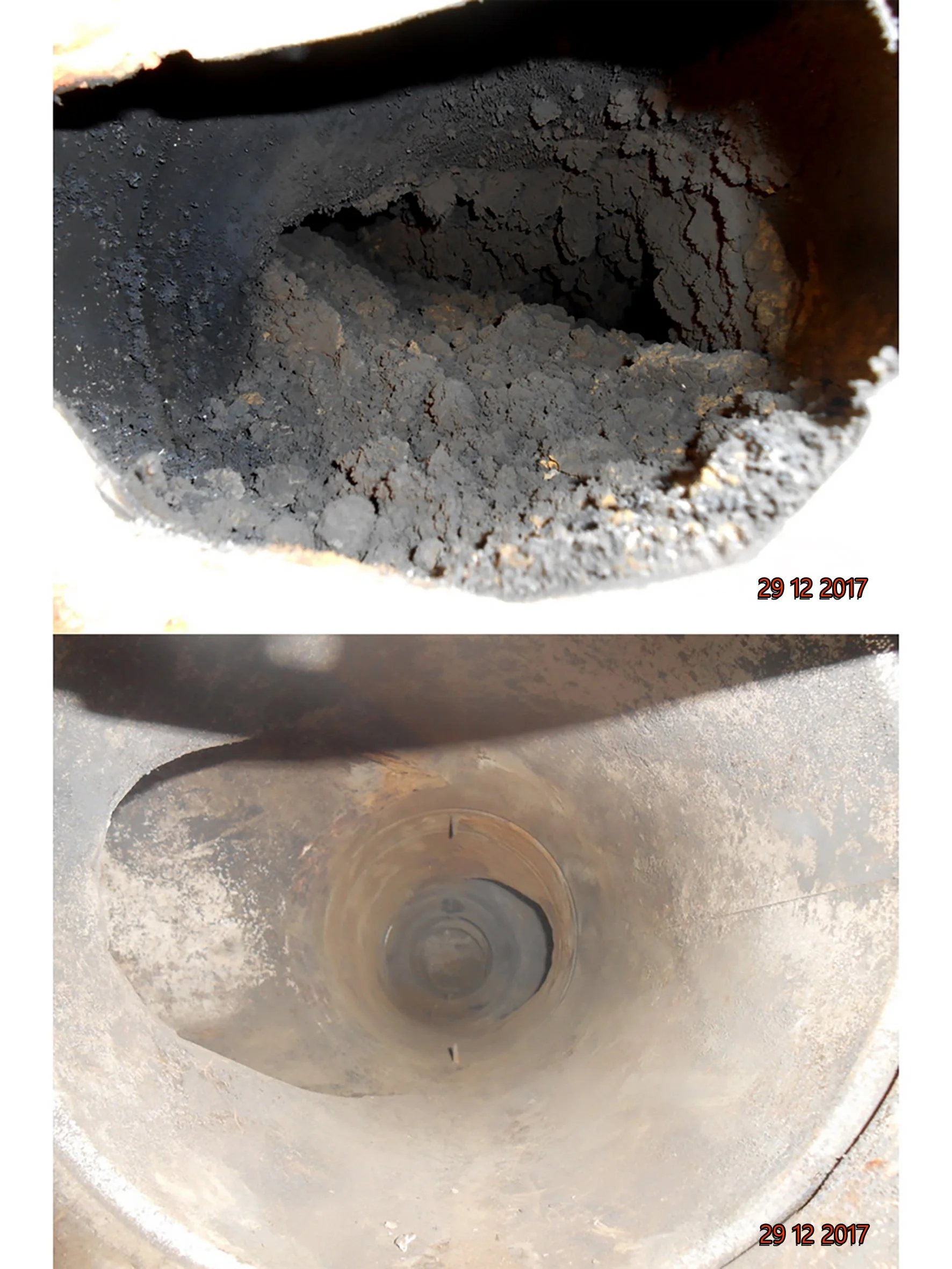
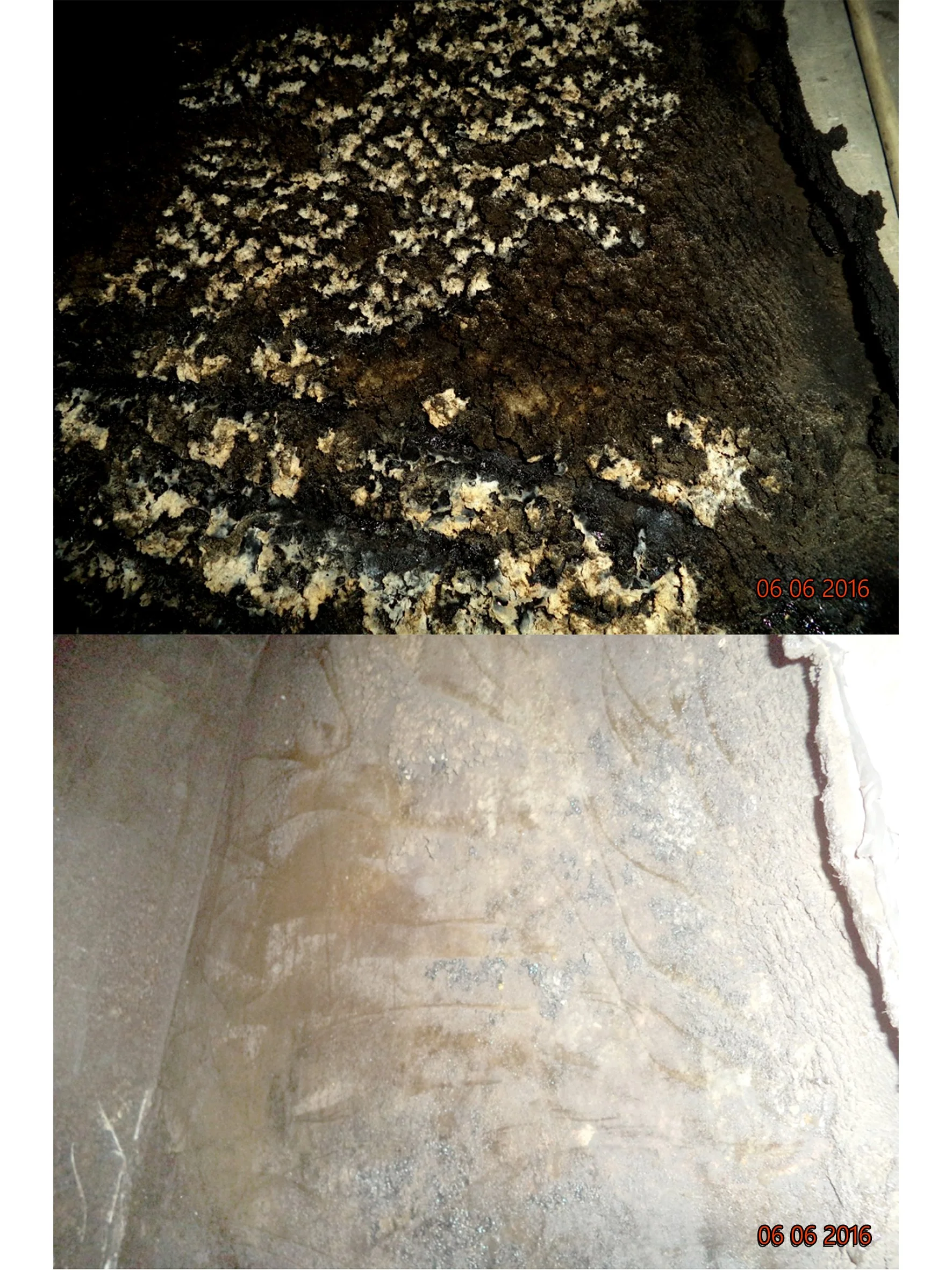
“We don't just clean the "exhale", we treat the source. By maintaining both your storage tanks and your exhaust pipelines, we ensure your heavy equipment runs with maximum reliability and minimum environmental footprint.”
Did you know?
The 10% Efficiency Gap: Studies in industrial combustion show that even a minor buildup of soot on heat exchanger surfaces can reduce fuel efficiency by up to 10%, costing large-scale operations thousands in wasted fuel.
The "Silent Killer": Carbon Monoxide (CO) levels spike significantly when petroleum fungus clogs injectors. A clean fuel system ensures a "Blue Flame" or "Clean Burn," reducing CO output by over 40%.
Micro-Clogging: Carbon particulates can break down to a size of 0.1 microns. At this size, they don't just pollute the air; they can actually "sandblast" the internal components of your exhaust valves, causing permanent mechanical pitting.
Humidity vs. Ash: In regions with humidity above 70%, petroleum ash becomes "sticky," bonding to exhaust walls 3 times faster than in dry climates, necessitating more frequent maintenance cycles.