Protect your business, your staff, and your reputation by ensuring your kitchen's internal ventilation stays as clean and safe as the surfaces your customers see.
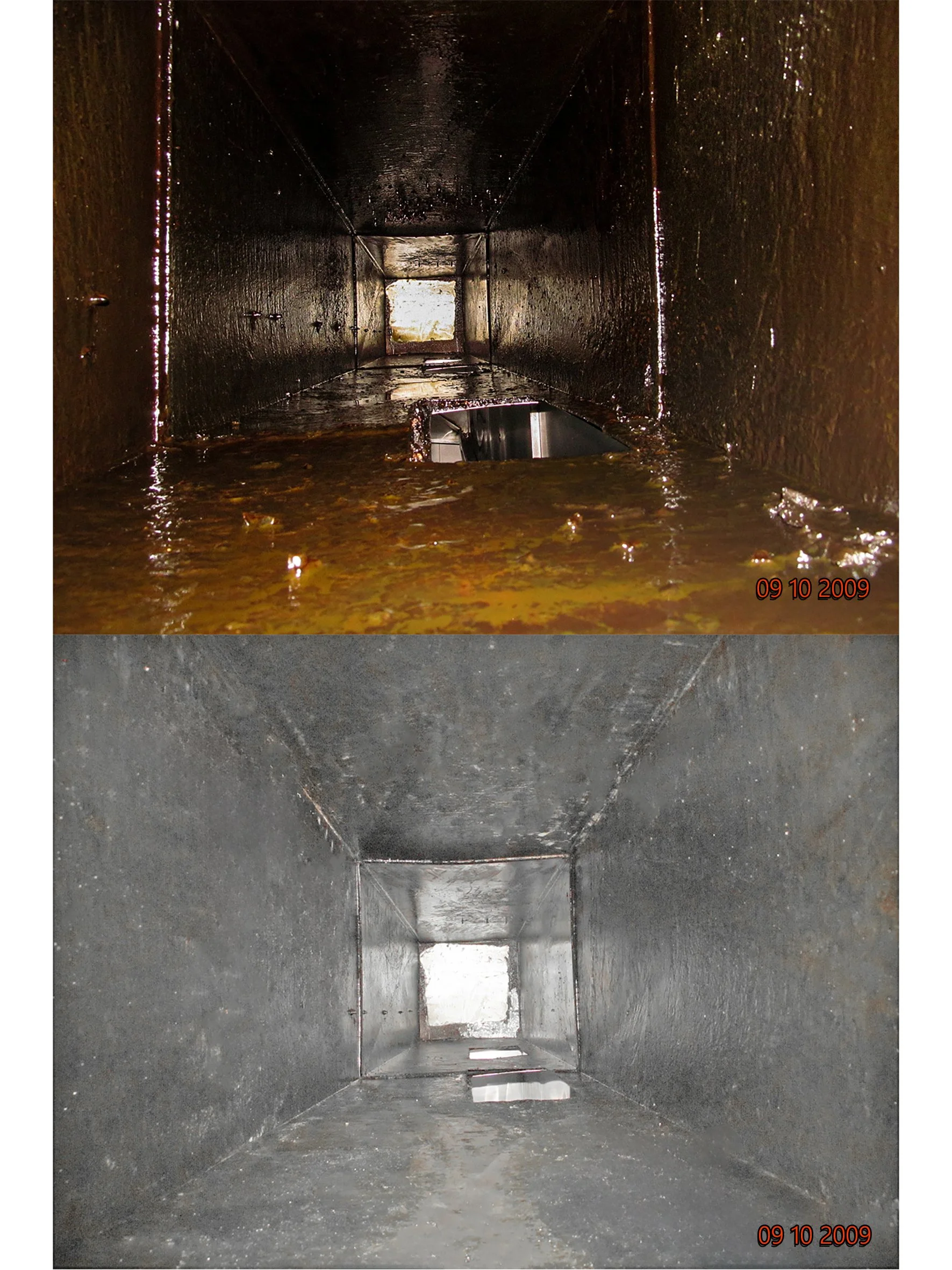
Certified deep-cleaning for your exhaust system, hoods, filters, ductwork, eliminating fire hazards and bacterial risks for a safer, high-performance kitchen.
Fire hazard
-
Fire hazard -
Fire & Explosion Hazards
The primary danger in a kitchen is grease accumulation. Over time, vaporized grease coats the interior of hoods and ducts, turning your ventilation system into a horizontal and vertical chimney of fuel.
The Flashpoint: Grease is highly combustible. A single flame flare-up on the stove can ignite the residue in the hood.
Secondary Explosions: While many assume kitchen fires are caused by gas leaks, a grease-laden duct can fuel a "secondary explosion," carrying fire through the entire building structure via the ductwork.
The Bacterial "Cycle"
Internal vents are breeding grounds for bacteria due to the constant fluctuations between cooking heat and nighttime cooling.
Bonding Breakdown: Bacteria react to temperature changes by breaking down the "glue" that holds grease to the duct walls.
Airborne Contamination: Once these bonds break, microscopic particulates (as small as 0.5 microns) can fall back through filters, contaminating food preparation surfaces and the air your staff breathes.
System Failure & Air Quality
Clogged airways do more than just smell bad; they cause mechanical and atmospheric issues:
Airway Clogging: Dust and grease build up in the "Ts, Ls, and Us" (bends and joints) of the duct line, disrupting suction and forcing the system to work harder.
Odors: As bacteria reach peak reproduction, they release foul gases—especially when vegetable-based oils are used—creating an unpleasant environment for both staff and diners.
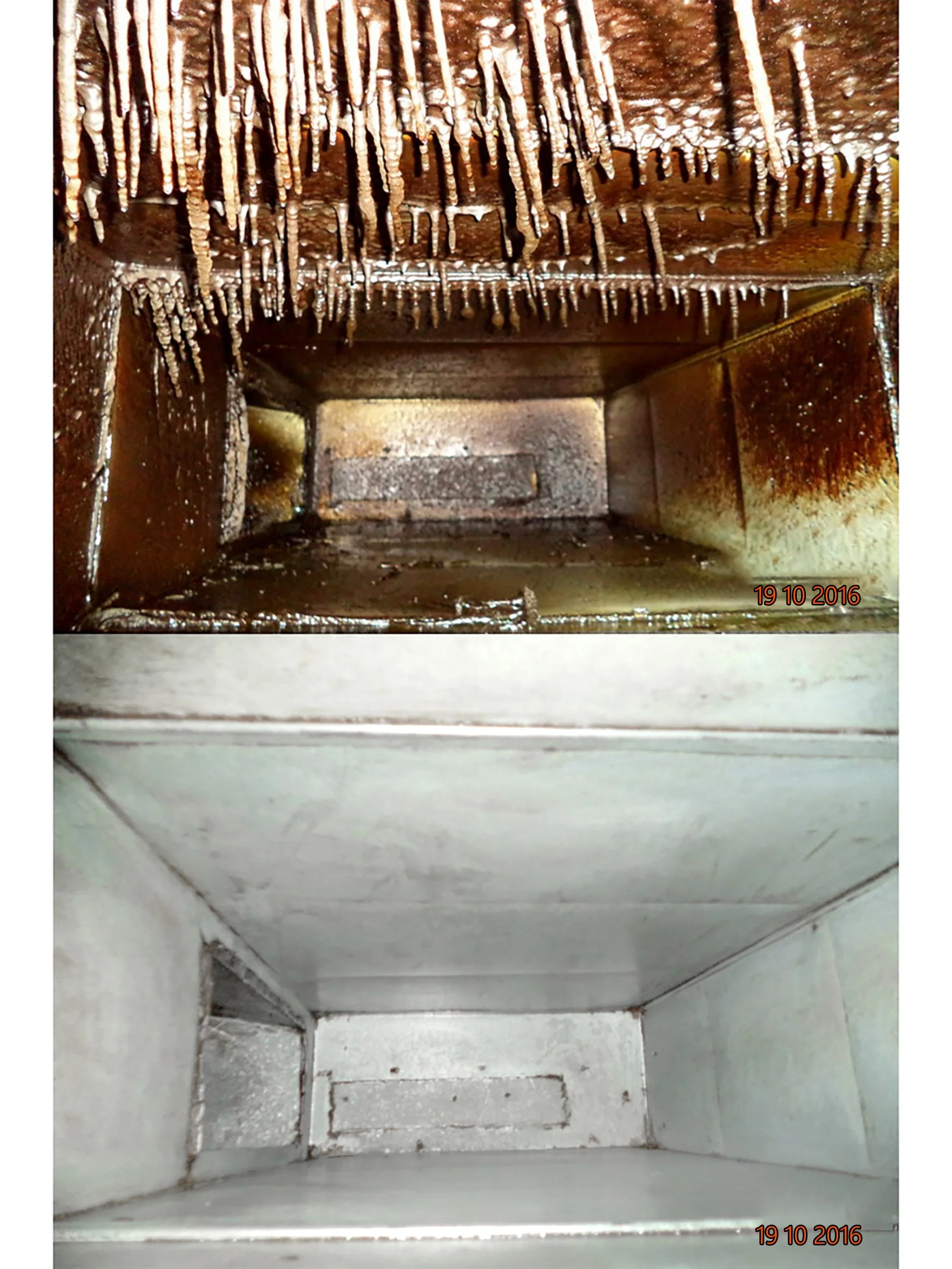
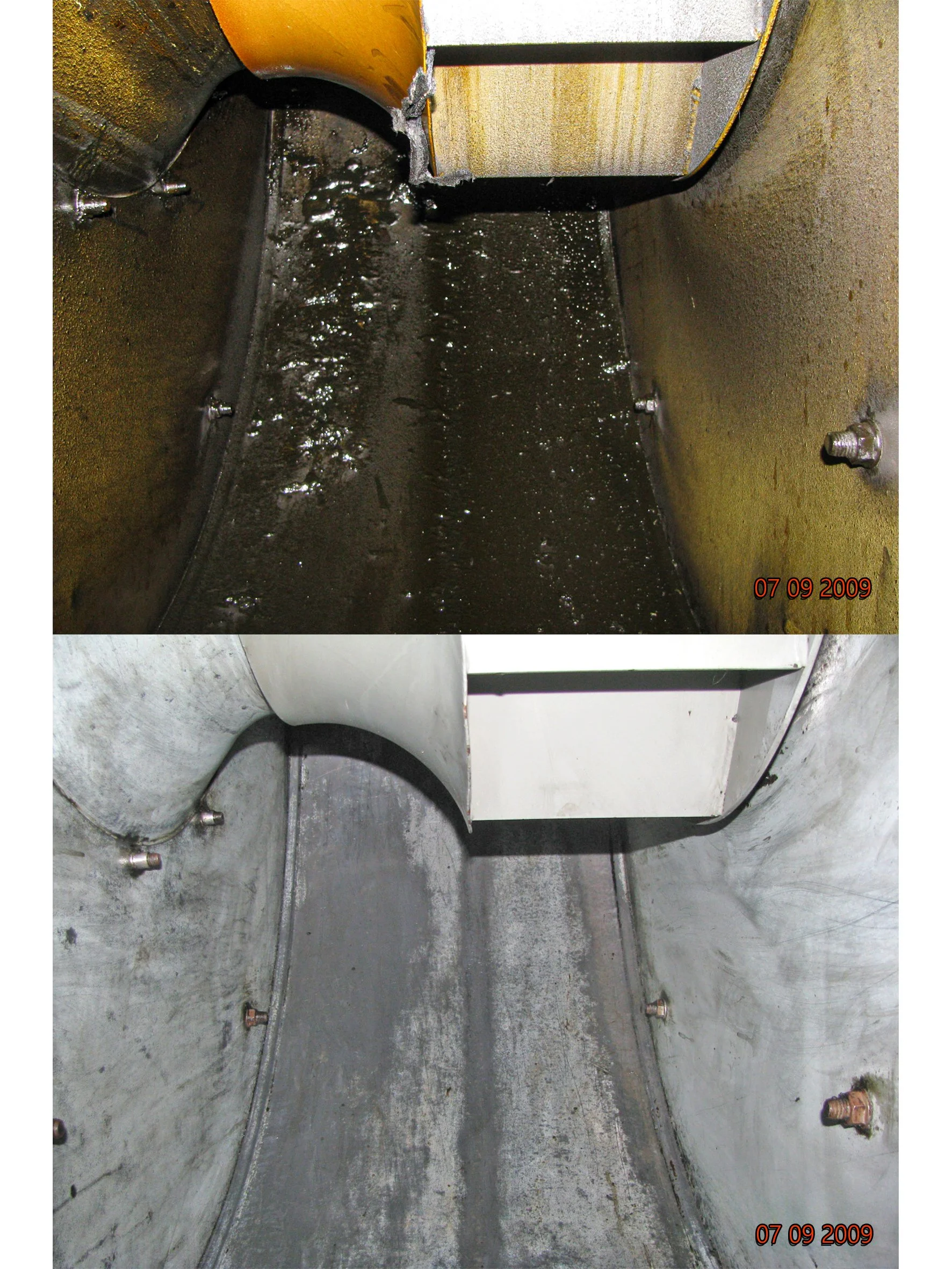
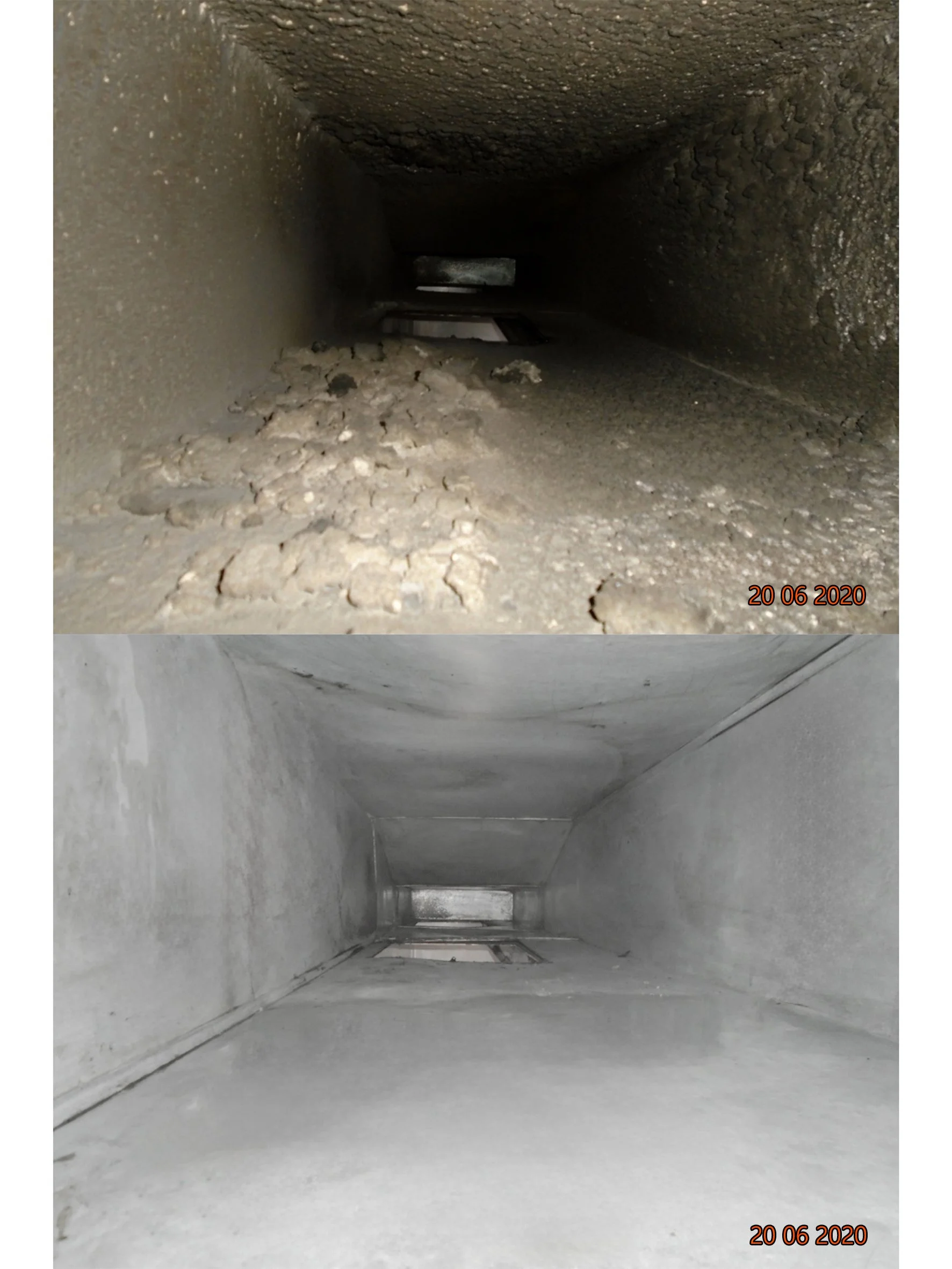
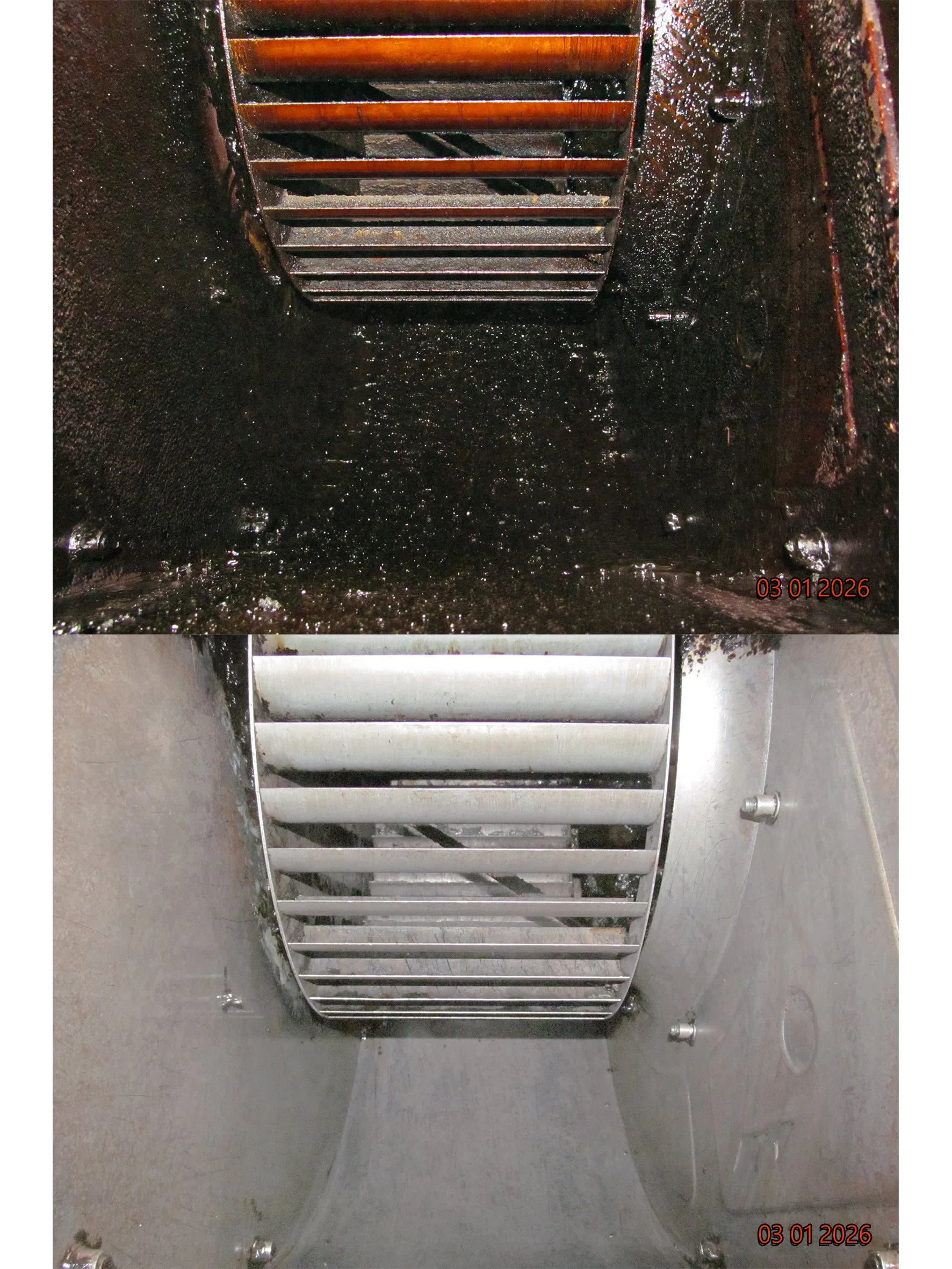
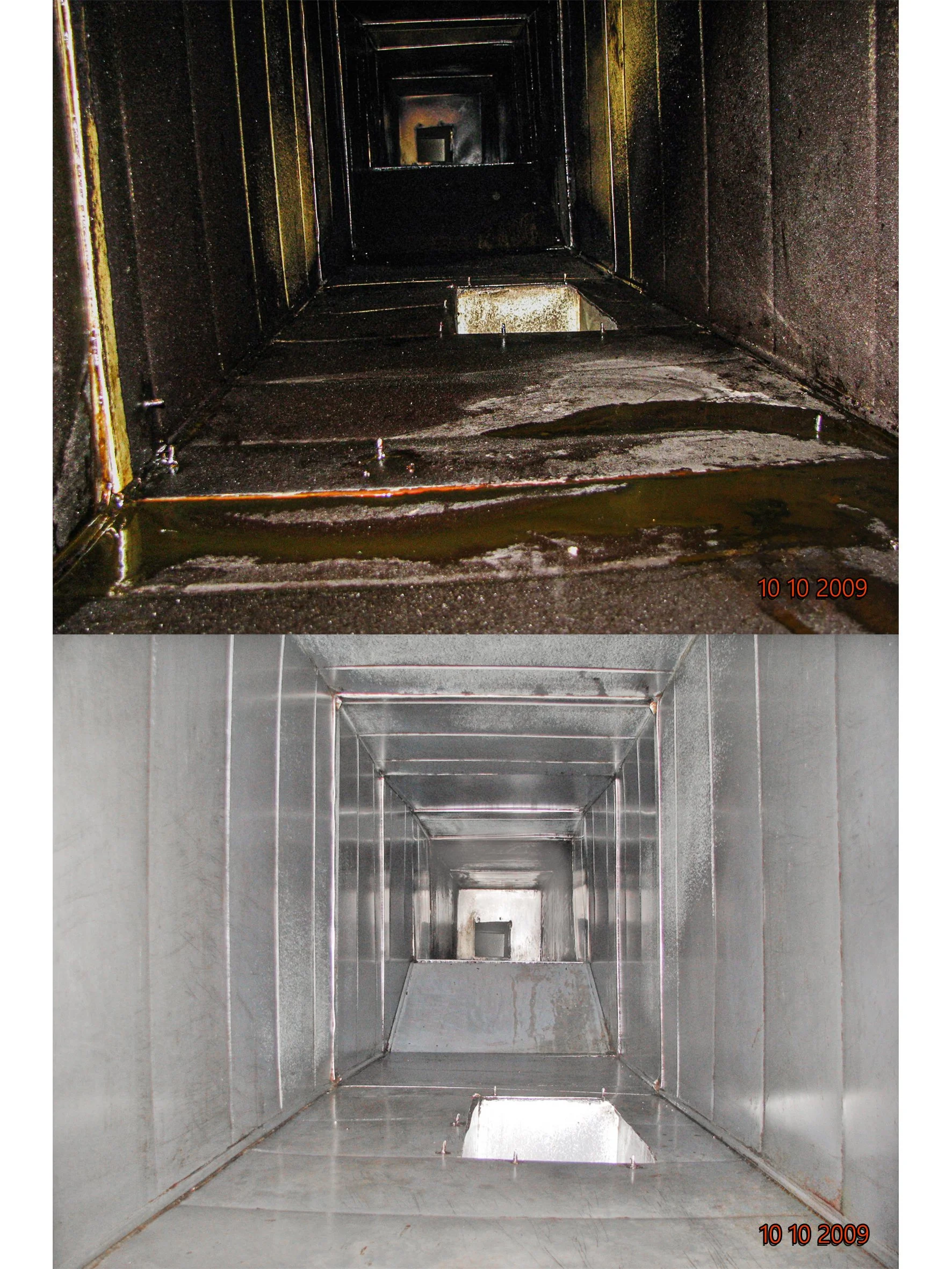
Proper kitchen ventilation maintenance isn’t just about cleanliness—it’s a critical pillar of fire safety and public health. While daily surface cleaning is standard, the "unseen" buildup inside ducts poses the greatest risks.
The "Invisible" Fuel: Cooking causes nearly 60% of all restaurant fires, and the #1 culprit is the ignition of accumulated grease in exhaust systems.
The 0.5 Micron Threat: Particles as small as 0.5 microns—thousands of times smaller than a grain of salt—can bypass filters, carrying bacteria directly back onto "clean" food and surfaces.
A Legal Mandate: In most developed nations, deep-cleaning ventilation ducts isn't just a suggestion; it’s a legal fire-safety requirement that can void your insurance if ignored.
Staff Health: Poor ventilation can lead to a 49% higher risk of respiratory issues for kitchen staff due to the constant inhalation of vaporized oils and microscopic contaminants.
The "Hidden Chimney": Ductwork acts like a horizontal fuse; once grease ignites, it can carry a fire through the entire building in minutes, bypassing standard fire extinguishers.